188:3.1 (2014.4) Throughout this Sabbath day the disciples and the apostles remained in hiding, while all Jerusalem discussed the death of Jesus on the cross. There were almost one and one-half million Jews present in Jerusalem at this time, hailing from all parts of the Roman Empire and from Mesopotamia.
Wednesdays were designated by Jesus as the apostles’ rest day. The Urantia Book states that April 5, 30 CE, Jesus told his disciples he sought to spend this Wednesday alone in the hills east of Jerusalem, knowing what lay ahead the rest of this week.
April 4, 30 CE is the date The Urantia Book states that Jesus gave his last public statement in the Jerusalem temple courts which concludes, “your house is left to you desolate.” Included here is the comment that follows this discourse, “Status of Individual Jews,” which was no doubt formulated to stave off any anti-Semitism Jesus’ harsh words to the Jewish leaders might evoke. The passage unequivocally condemns the atrocities committed against Jews in subsequent centuries, calling out those persecutors as “intolerant, unworthy, and bigoted professed followers of Jesus of Nazareth, who was, himself, a Jew by natural birth.” It should be noted that this section of the book appeared around 1940 as millions of Jews across Europe were being rounded up and murdered. The Urantia Book is clear that salvation is a result of one’s simple spirit-born faith, not adherence to an organized belief system.
175:1.1 (1905.3) “This long time have I been with you, going up and down in the land proclaiming the Father’s love for the children of men, and many have seen the light and, by faith, have entered into the kingdom of heaven. In connection with this teaching and preaching the Father has done many wonderful works, even to the resurrection of the dead.
April 3, 30 CE is the date The Urantia Book states Jesus spoke in the Jerusalem temple area and finally took action against the blatant commerce going on in his “Father’s house.” Each day this week UrantiaVoice will follow The Urantia Book’s daily account of the final events in the life of Jesus.
Ben Bowler and his wife were about to build their dream home in Australia. Land had been purchased, a design chosen, and they were ready to sign on the dotted line and begin construction. Then Ben got a tap on the shoulder.
Sometimes, when we ask an apparently simple question, the answer is surprisingly profound and revealing. That’s what happened when I posted this on the “Urantia Group” Facebook page: “What was your childhood religion & its effect on you? I was raised as a Jehovah’s Witness.” 295 comments later, I felt like I better understood and more deeply appreciated each of the people who responded. The depth of their honesty and their courageous willingness to share intimate thoughts and experiences created a circle of trust that answered more than the simple question I asked.
Most of you may have already voted. If you have, thank-you for your good citizenship. Records for early voting have been broken in this United States midterm election. Lines are drawn. Anger and uncertainty are up.
In the last few weeks, we have experienced the national drama of Brett Kavanaugh’s confirmation in our bodies, under our skin, within the trauma of memories, our own and others.
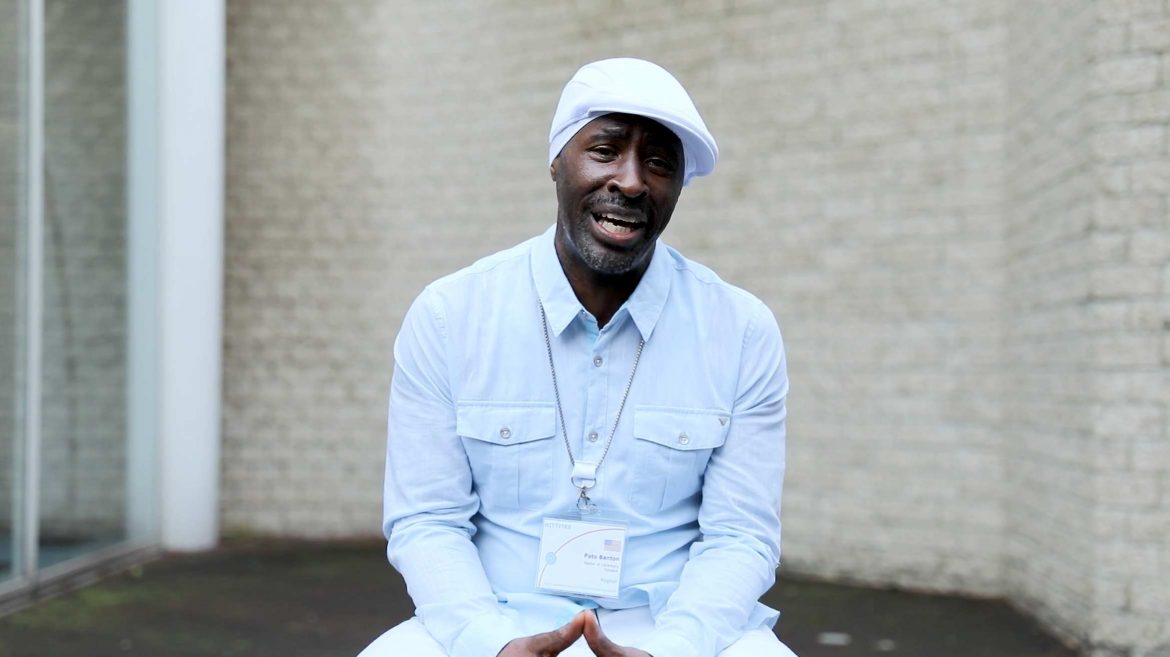
Pato Banton says that “I think every situation that a child is brought up into becomes normal for them.” Hearing him reflect on his childhood in London reveals a “normal” most of us would find deeply traumatizing.
Bells From the Deep takes us on a journey—at times profoundly aesthetic—into a seldom seen religious and mystical world where we observe a wide range of men and women, each engaged in his or her own quest for what Herzog might consider to be “ecstatic truth.”